Proof Culture - From Custom Sneaker Restorations to a Scalable Amazon Success Story
A Customer Evidence Film for Amazon’s Black Business Accelerator
Proof Culture is a Cleveland‑based sneaker care brand built by sneakerheads, for sneakerheads. What began as a small custom‑sneaker restoration service evolved into a fast‑growing product company offering premium laces, crease protectors, cleaners, and accessories designed to help people “stay fresh, no stress”.
This Customer Evidence story is part of a broader collaboration between Amazon and Watts Media to document how sellers in the Amazon Black Business Accelerator (BBA) program transform their businesses through access, education, and community.
This story is part of our broader Customer Evidence work for enterprise organizations - films designed to show not just outcomes, but the real decisions, constraints, and founder perspectives that make growth credible. For Amazon’s Black Business Accelerator, Customer Evidence plays a critical role in demonstrating how access, partnership, and e‑commerce infrastructure translate into real business transformation.
The Context
When craftsmanship outpaces scalability
Founder Tiffany White built Proof Culture one pair of sneakers at a time. The demand was there, and the quality was undeniable - but the model had limits. Service‑based work capped growth, tied success directly to Tiffany’s time, and made it difficult to expand without sacrificing quality.
At the same time, Proof Culture customers were revealing a deeper insight through repeat behavior: the same damaged laces, the same wear patterns, the same unmet needs. What initially looked like repair work was actually market research in disguise.
The Challenge
Turning a service‑based hustle into a scalable product business
The challenge wasn’t demand - it was translation.
Proof Culture needed to move from:
One‑to‑one service work
To repeatable, sellable products
Without losing credibility within sneaker culture
At the same time, Tiffany was building alone - navigating product development, brand decisions, and growth without a built‑in support system.
The Opportunity
A product people wanted - and a platform built to scale it
When Proof Culture launched its first replacement laces, customers responded immediately. That early success opened the door to a broader product ecosystem: sneaker care solutions designed by people who actually lived the problem.
Around the same time, Tiffany discovered the Amazon Black Business Accelerator - a program offering education, support, and community for Black‑owned businesses. For Proof Culture, BBA became the missing infrastructure: access to tools, peers, and a platform capable of turning product intuition into scalable impact.
Customer Evidence Strategy
Decisions, constraints, and tradeoffs
This Customer Evidence story was shaped long before filming began.
Deep pre‑interview research
Before any questions were written, Watts Media conducted extensive research into Proof Culture’s evolution - including brand history, product development decisions, Amazon listings, customer reviews, and prior interviews. This groundwork was intentionally done to avoid surface‑level storytelling and uncover where real inflection points occurred.
Discovery call before the camera
Rather than treating the on‑camera interview as the first point of contact, director Andrew Harper spent time speaking with Tiffany beforehand - not to rehearse answers, but to understand her communication style, personality, and how she naturally reflected on challenges and decisions.
That conversation directly informed the interview structure:
Some questions were removed entirely
Others were reframed to invite reflection rather than promotion
The goal was credibility, not polish
Why a documentary format was chosen
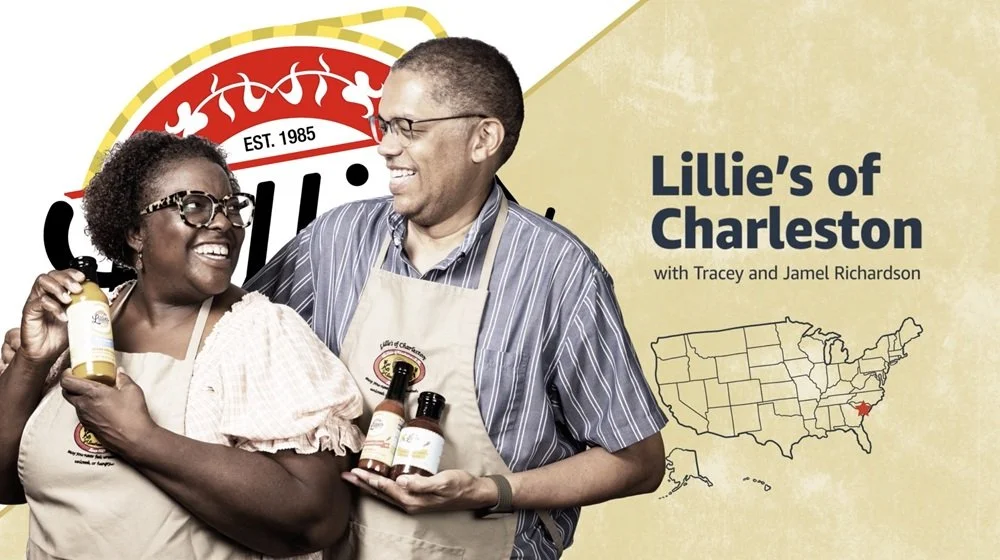
This approach builds on patterns we’ve seen across other Customer Evidence stories created for Amazon’s Black Business Accelerator. In projects like Lillie’s of Charleston, credibility depended less on showcasing products and more on allowing founders to articulate their decisions, setbacks, and growth in their own words. Across multiple BBA stories, like Mighty Paw we’ve found that founder‑led narratives produce stronger trust signals than tightly scripted brand explanations, especially when Customer Evidence is meant to function as proof, not promotion.
We considered multiple approaches: a product‑forward film, a program‑explainer, or a tightly scripted brand story. Each was rejected.
A product‑led structure would have narrowed the story too quickly. A program‑only narrative risked positioning Tiffany as a case study rather than a founder with agency.
We chose a documentary‑style, founder‑first approach because Proof Culture’s success was driven by lived experience — personal decisions, moments of doubt, and the compounding effect of access and community. That reality couldn’t be captured through scripted soundbites.
The Tradeoff
By prioritizing authenticity over control:
The story required more trust in the process
Interviews unfolded over multiple days instead of a single shoot
The narrative was shaped by what emerged, not what was prescribed
The result is Customer Evidence that functions as proof, not marketing.
Our Approach
Telling the story in Tiffany’s own words
Watts Media traveled to Cleveland to capture Proof Culture on location, in real spaces, with real people, and without interruption. The film centers on three narrative pillars:
The Emotional Reality of Entrepreneurship
Tiffany speaks candidly about the isolation of building a business alone, grounding the story in lived reality rather than success highlights.
The Shift from Service to Scalable Products
The film traces how a single observation, repeatedly destroyed laces, and sparked a product line capable of scaling far beyond the city where Proof Culture began.
Amazon’s Black Business Accelerator as a Catalyst
Through BBA, Tiffany gained education, peer support, and access to a broader market. One unscripted moment, sharing knowledge with other founders and being surrounded by people taking notes became the emotional center of the film..
Production Execution
Capturing authenticity in context
The production focused on moments that supported credibility:
In‑person interviews filmed across multiple days
Real interactions with fellow BBA entrepreneurs
Product development scenes and sneaker care demonstrations
Community moments that showed impact beyond sales
The visual approach mirrors Proof Culture’s brand: clean, confident, and rooted in sneaker culture - not over‑styled, not performative.
The Outcome
A powerful Customer Evidence story about access, scale, and legacy
Through Amazon, Proof Culture transformed from a local service business into a national product brand with:
Scalable revenue
A growing product line
Resources to reinvest in the business
A supportive entrepreneurial community
“I’ve actually grown it because of my ability to sell products on Amazon.”
For Amazon, the film demonstrates the real‑world impact of the Black Business Accelerator.
For Proof Culture, it’s proof - literally - that entrepreneurship doesn’t have to be lonely.
What We Learned
Customer Evidence is strongest when it’s designed as a system, not a campaign
Pre‑interview discovery produces more credibility than scripted prompts
Authenticity scales better than polish in enterprise storytelling
Visit our dedicated Amazon page to see all the work we’ve done with them. Or visit our Live Action page to see all or our live action work.